Why your yard has so many
The mosquito biting you at 2 in the afternoon is almost always the Asian tiger mosquito. It lays eggs on the inside walls of anything that holds rainwater: buckets, saucers under flower pots, clogged gutters, tarps, tires, toys and tree holes. NC State Extension calls it the state's most common mosquito and notes it feeds in the daytime. Extension's home mosquito guide says it usually flies only 100 to 300 yards. That's good news. Most of the mosquitoes in your yard grew up in your yard or the one next door.
Extension also notes that container eggs can survive the winter and hatch when rain floods them, and that larvae turn into pupae 7 to 10 days after hatching. A wet stretch in May can put a new wave of mosquitoes in the yard within a couple of weeks.
Near the lakes and creeks
Homes around Oak Hollow Lake, High Point City Lake and the wooded creeks that feed them deal with more than tiger mosquitoes. Ditches, low spots and the edges of floodplains hold water after storms, and floodwater species can hatch in huge numbers from them. We can't treat a city lake, and we don't try. We treat your property: the shrubs and shady ground where mosquitoes rest, plus the water that sits on your lot.
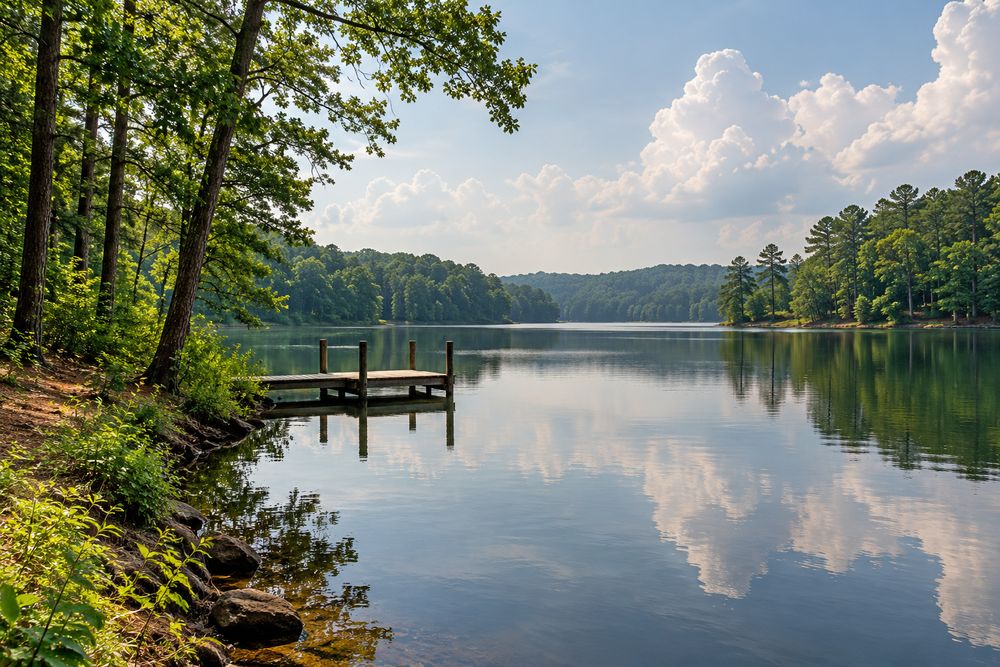 Wooded shorelines like this hold mosquitoes in the shade
What a treatment visit includes
- Walk the yardTip, drain or flag anything holding water
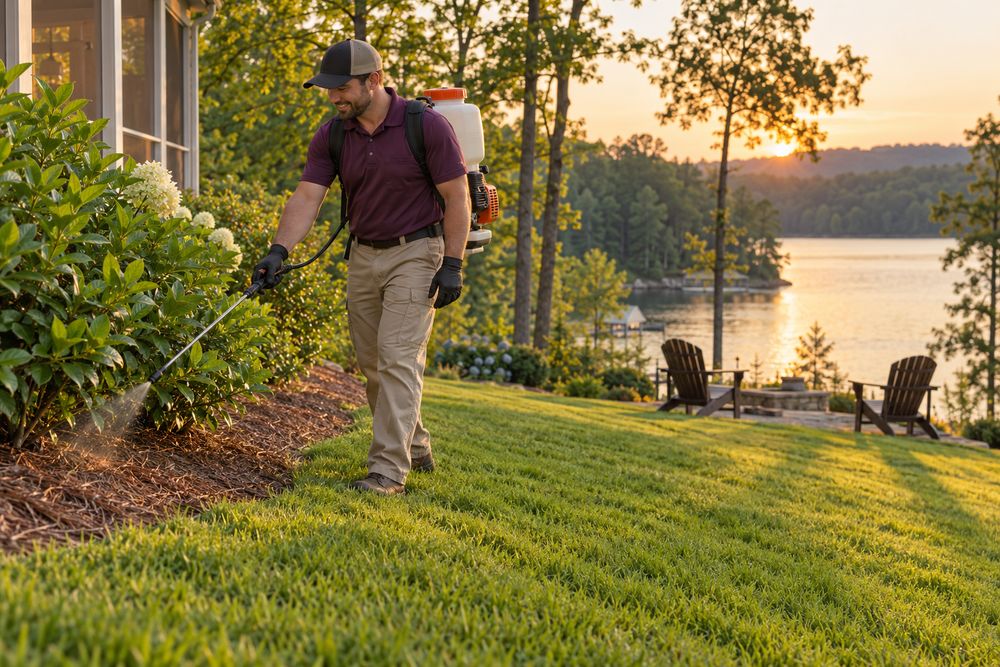
- Treat resting spotsUndersides of shrubs, ground cover, fences, crawlspace vents
- LarvicideWater that can't be dumped, like drains and low spots
- Next visitEvery 3–4 weeks through the season
Treatment intervals follow the product label. We skip flowering plants when pollinators are working them and tell you how long to keep people and pets off treated areas.
What you can do between visits
Once a week, walk the yard and dump anything that holds water. Flip kiddie pools and wheelbarrows, change birdbath water, clear gutters and check the saucers under potted plants. Extension calls out tires, boats, canoes and plant pots as common backyard breeding sites. Cover rain barrels with fine screen. The less water your lot holds, the longer each treatment keeps working.