Signs you'll actually notice
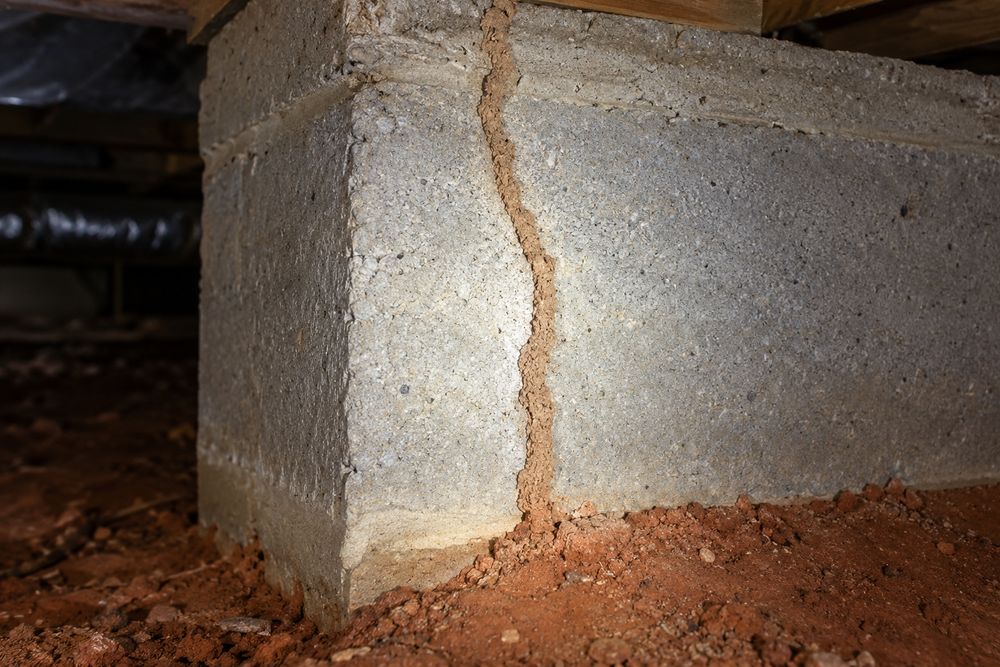
Most people find termites one of three ways. A cloud of winged swarmers comes out near a window or a door frame, usually on a warm spring day after rain. Someone crawling under the house spots a pencil-wide mud tube climbing a pier or the foundation wall. Or a floorboard, baseboard or door trim turns out to be hollow when it gets bumped.
NC State Extension explains that swarmers are the colony's winged reproductives and that swarms happen in daytime, often in spring and after a rainstorm. Swarmers outdoors may come from a stump, landscape timbers or a neighbor's yard. Swarmers inside the house usually mean the colony is feeding in or under it.
The NC Department of Agriculture's own guide says termites will not cause significant structural damage in a matter of weeks, and it tells homeowners not to be rushed into a treatment program. Save a few swarmers in a bag, take photos, and call.
The inspection
We go under the house. On a crawlspace home that means checking every pier, the sill plate, the band joist, plumbing penetrations and the vapor barrier, probing wood that sounds soft and taking moisture readings. Outside, we look at wood touching soil, mulch piled against siding, gutters that dump water at the foundation, and stumps or old landscape timbers.
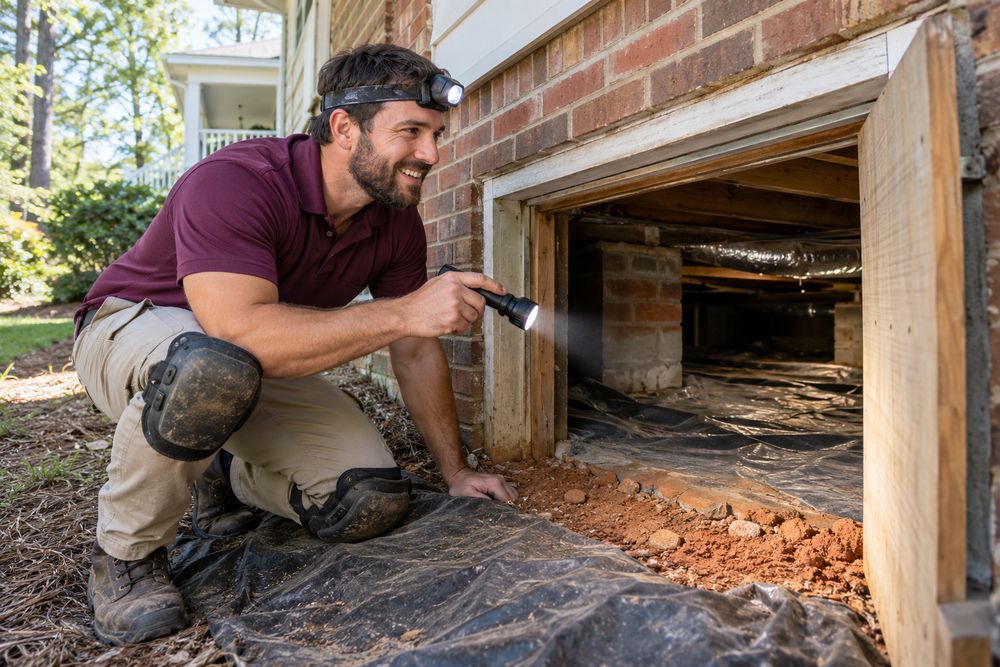 Checking piers and sills from the crawlspace door
Slab homes get the same outside check, plus the garage, bath traps and any expansion joints we can reach. You get a diagram of the house showing where we found activity or damage and where the conducive conditions are.
Liquid treatment or bait stations
The state guide lists the usual options: soil treatment, termite baits, physical barriers, mechanical alteration and wood treatment. In practice, most High Point homes get one of the first two.
- Liquid soil treatmentA continuous treated zone in the soil along the foundation and piers
- Bait stationsMonitored stations in the ground; workers carry the bait back to the colony
- Either wayA written agreement, a diagram and a yearly inspection
Baits use far less product and work on the colony itself, but they can take longer and need ongoing monitoring visits. Liquid treatments act faster but need trenching or drilling along the foundation.
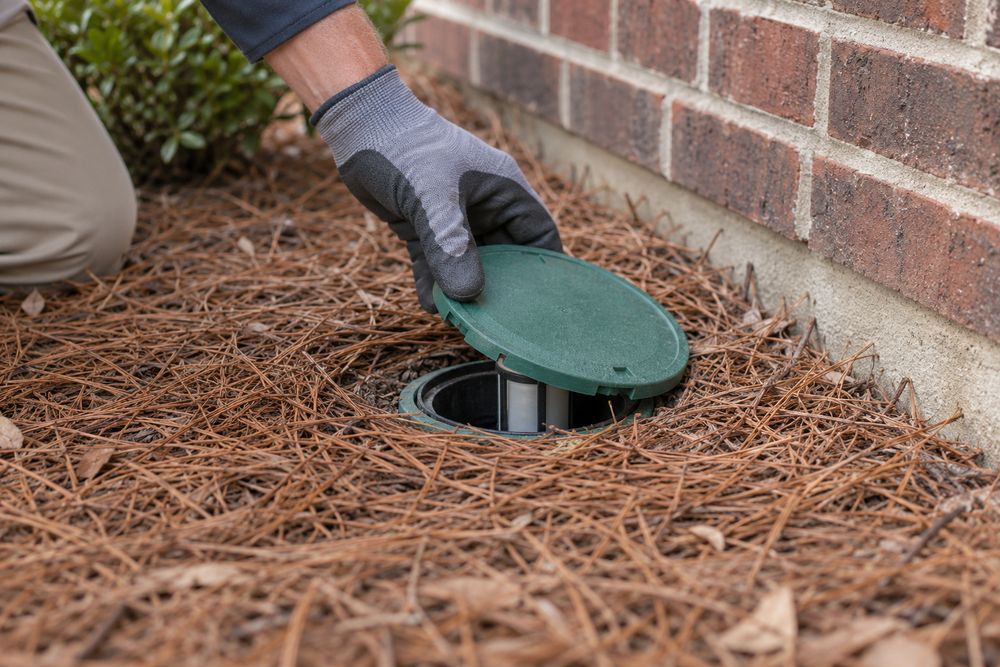 A monitored bait station beside the foundation
We'll tell you which one we'd pick for your house and why. Things like a well near the foundation, a finished basement or a lot of hardscape can push the decision one way or the other.
What the agreement says
North Carolina requires every termite contract to be written down. The state's guide to termite agreements says it must include the licensee's license number and phase, a foundation diagram marking active or inactive infestation and visibly damaged timbers, whether re-inspections are included, when re-treatment happens, and the total price.
The state describes three kinds of follow-up: re-treatment only (the most common), re-treatment plus damage repair up to a limit, or no warranty at all. Read which one you're getting. A renewal is not a promise termites won't return. It says what happens if they do.
Home sales and the WDIR
If you're buying or selling, the lender will usually want the NC Wood-Destroying Insect Information Report, Form WDIR 100. It covers visible evidence of subterranean termites, powderpost beetles, old house borers and carpenter ants, and it lists conditions conducive to termites, including wood at 20% moisture or more in the crawlspace.
 Writing up a WDIR after the crawl
A WDIR reports visible evidence only. It doesn't cover structural soundness and it doesn't clear the house. If the report shows termites in the wood, the state says to assume some damage and have a contractor or engineer look at it. We report what we see, and we're happy to walk the buyer or seller through it on the phone.